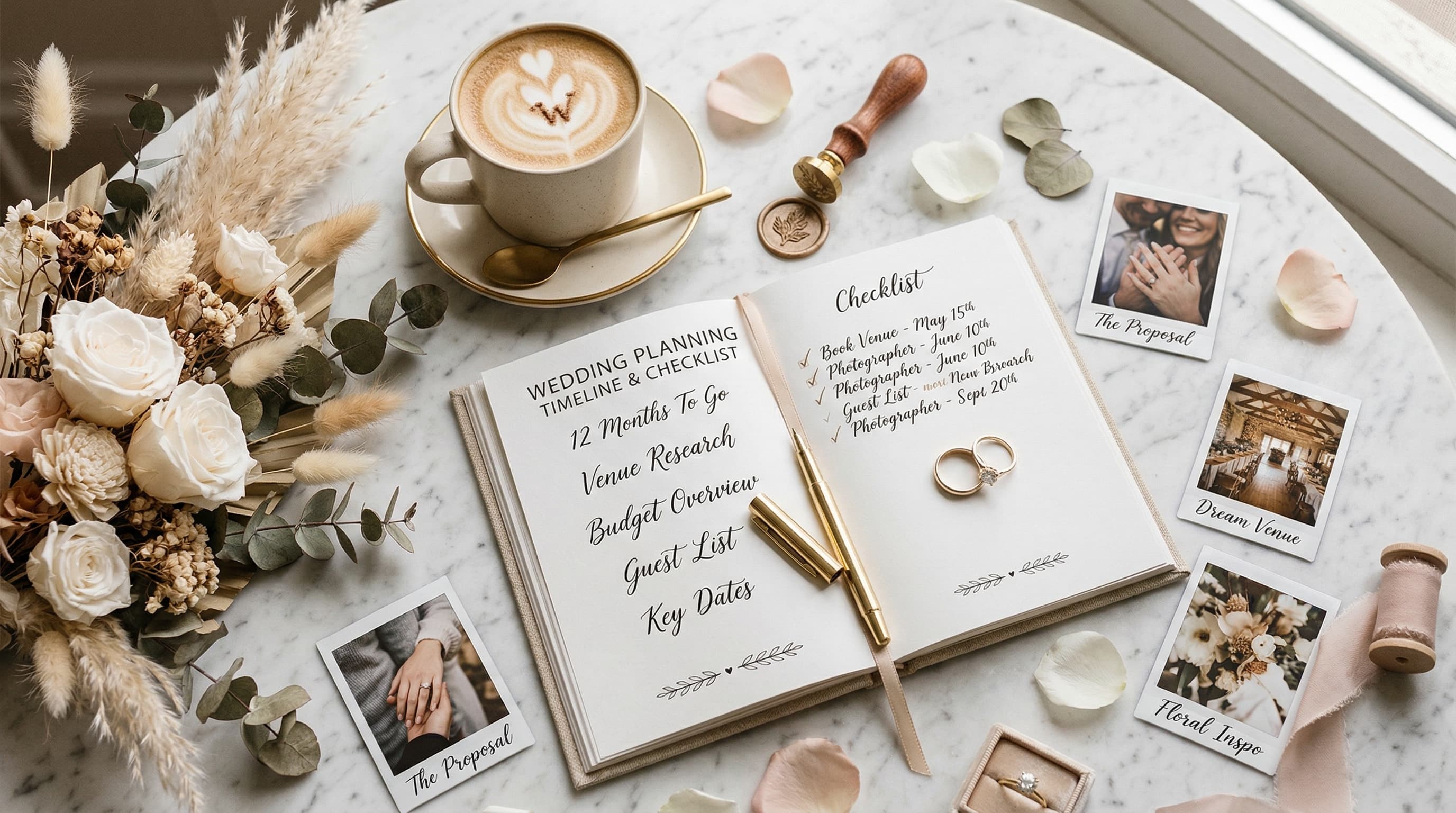
The Ultimate Wedding Planning Timeline: Month-by-Month Guide
A comprehensive month-by-month wedding planning timeline to keep you organized and stress-free from engagement to 'I do.'
You said yes — and now the planning begins. Whether you have 18 months or six, one of the smartest things you can do early on is build a clear, realistic timeline. A good wedding planning timeline doesn't just keep you organized; it keeps you sane. It turns a massive, overwhelming project into a series of manageable steps, each with its own moment in the spotlight.
Here's your month-by-month roadmap from engagement to the big day.
12–18 Months Out: Lay the Foundation
This is your big-picture phase. You're not picking napkin colors yet — you're making the decisions that shape everything else.
Set your budget. Before you fall in love with a venue or a photographer's portfolio, get honest about numbers. Talk with anyone who's contributing financially and agree on a total. Then break it down by category: venue, catering, photography, attire, florals, entertainment, and a contingency fund of at least 5–10%.
Choose your date (or a range). Having flexibility here gives you leverage with vendors and venues. Consider the season, day of the week, and any conflicts with holidays or major events.
Book your venue. This is the single most time-sensitive booking you'll make. Popular venues fill up 12–18 months in advance, especially for peak-season weekends. Your venue dictates your guest count, your aesthetic, and often your catering options — so treat this as the anchor decision.
Draft your guest list. Even a rough count matters now. It affects your venue choice, your catering budget, and your invitation order down the line. Aim for a realistic number, not a wish list.
Start researching vendors. You don't need to book everyone yet, but start exploring photographers, caterers, DJs or bands, and florists. Read reviews, browse portfolios, and note who resonates with your style.
9–12 Months Out: Lock In Your Team
With your venue secured, it's time to assemble the people who'll bring your vision to life.
Book your top-priority vendors. Photographer, videographer, caterer (if not bundled with the venue), and entertainment should be locked in now. These are the vendors who book out fastest and have the biggest impact on your guest experience.
Choose your wedding party. Ask your bridesmaids, groomsmen, and anyone else you'd like standing beside you. Give them enough lead time to plan for attire, travel, and pre-wedding events.
Start thinking about your aesthetic. This doesn't mean finalizing every detail, but begin collecting inspiration for colors, florals, and overall vibe. Pinterest boards are great, but pay attention to what excites you in real life too — a restaurant's lighting, a friend's garden, the color of a sunset.
Ready to start planning your wedding?
Get a personalized plan, vendor recommendations, and budget tools — all powered by AI.
Start Planning for Free6–9 Months Out: Details Take Shape
You've got the bones in place. Now the personality of your wedding starts to emerge.
Send save-the-dates. Give your guests — especially those traveling — plenty of notice. Digital save-the-dates are perfectly acceptable and more eco-friendly, but paper versions add a lovely tactile touch.
Book remaining vendors. Florist, officiant, transportation, hair and makeup, and any rental companies (lighting, furniture, linens) should be confirmed now.
Register for gifts. Set up your registry early enough that guests can browse before any showers or pre-wedding events. Mix practical items with a few splurges, and consider adding a honeymoon fund or charity option.
Plan your honeymoon. If you're traveling internationally or during peak season, book flights and accommodations now. Even if you're postponing the big trip, a mini-moon right after the wedding is a wonderful way to decompress.
4–6 Months Out: Refine and Confirm
This is the phase where "big picture" meets "fine print."
Order your attire. Wedding dresses can take 4–6 months for production and alterations. Suits and tuxedos need less lead time but shouldn't be left to the last minute, especially for custom options.
Design and order invitations. Include RSVP cards (or a link to your wedding website), reception details, and any accommodation or travel information. Plan to mail them at the 6–8 week mark.
Finalize your ceremony. Meet with your officiant to discuss readings, vows, and the overall flow. If you're writing your own vows, start drafting now — they always take longer than you think.
Book your rehearsal dinner venue. Confirm the guest list (typically the wedding party, immediate family, and out-of-town guests) and make reservations.
2–4 Months Out: The Home Stretch
Everything is coming together. Your job now is to confirm, coordinate, and communicate.
Send invitations. Mail them 6–8 weeks before the wedding, with RSVPs due 3–4 weeks before. Track responses carefully and follow up with anyone who hasn't replied by the deadline.
Create your day-of timeline. Map out the entire wedding day hour by hour: hair and makeup start times, ceremony, cocktail hour, reception entrance, first dance, toasts, cake cutting, and last call. Share this with every vendor and your wedding party.
Finalize menus and seating. Confirm your catering selections, provide final guest counts, and start working on the seating chart. Pro tip: tackle seating in rounds — place the easy tables first, then work through the trickier combinations.
Schedule dress fittings and suit pickups. Allow time for at least two fittings. Bring your shoes, undergarments, and any accessories you'll wear on the day.
2 Weeks to Wedding Day: Final Touches
You're almost there. This phase is about tying up loose ends and giving yourself permission to enjoy the moment.
Confirm every vendor. Send a final email or make a quick call to each vendor with the date, time, location, and any last-minute details. Provide your day-of contact person's information.
Prepare tips and payments. Organize envelopes for any final vendor payments and gratuities. Assign a trusted person to handle day-of distribution so you don't have to think about it.
Break in your shoes. Wear them around the house for a few evenings. Your feet will thank you during the reception.
Practice your vows. Read them aloud — to yourself, to your pet, to the mirror. Hearing the words helps you deliver them with confidence and emotion on the day.
Delegate. Hand off responsibilities to your wedding party, family, or day-of coordinator. You've done the work. Now let others carry the load so you can be fully present.
A Timeline Is a Living Document
The most important thing to remember is that your timeline should work for you, not stress you out. Life happens — vendors reschedule, guest counts shift, inspiration strikes at unexpected moments. Build in buffer time, stay flexible, and remember that the goal isn't a perfect checklist. It's a beautiful day that reflects who you are as a couple.
The best timelines aren't rigid schedules — they're gentle guides that keep you moving forward without losing sight of what matters most: celebrating your love with the people who matter to you.
Happy planning. You've got this.